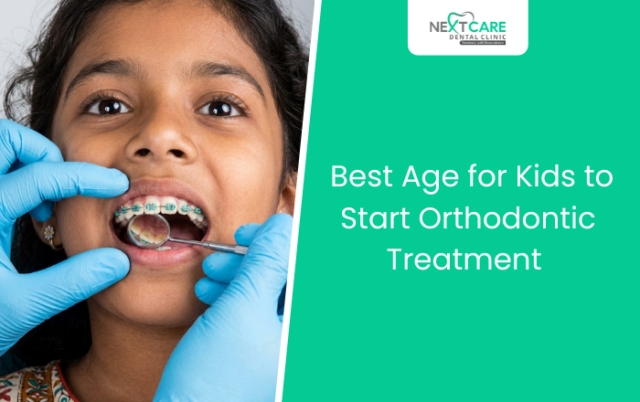
Most parents notice something small first. Maybe it’s a crowded front tooth, a jaw that seems to shift when your child bites down, or a habit like thumb-sucking that’s lasted longer than expected. The question that follows is almost always the same: is this something to worry about now, or can it wait?
Timing matters more in orthodontics than many parents realize. Treat certain issues too early, and you may be doing work the mouth would have corrected on its own. Wait too long, and a simple fix can turn into a more involved one. Understanding the best age for kids to start orthodontic treatment can save families time, money, and unnecessary stress later on.
This guide walks through what orthodontists actually recommend, the signs worth watching for, and what to realistically expect at each stage of your child’s dental development.
What Is Orthodontic Treatment?
Quick Answer: Orthodontic treatment is the branch of dentistry focused on correcting misaligned teeth and jaws. It includes tools like braces, clear aligners, and space maintainers, used to improve how teeth fit together, how a child bites, and how their smile develops over time.
It’s not only about appearance. Properly aligned teeth are easier to clean, distribute chewing pressure more evenly, and reduce the risk of long-term jaw strain.
Why Age Matters for Orthodontic Treatment
Children’s jaws are still growing, and that growth is exactly what orthodontists use to their advantage. Certain problems, like a narrow upper jaw or a significant overbite, are far easier to guide while bone is still developing. Once growth slows down in the teen years, some corrections require more time, more appliances, or occasionally jaw surgery in adulthood.
This is why orthodontists talk about “growth windows” rather than a single fixed age. Catching an issue during the right window can mean a shorter, simpler treatment path.
Best Age for a Child’s First Orthodontic Visit
Quick Answer: The American Association of Orthodontists recommends that children have their first orthodontic evaluation by age 7. This doesn’t mean treatment starts then. It means a specialist checks how the jaw and teeth are developing while there’s still time to intervene if needed.
By age 7, a child usually has a mix of baby and permanent teeth, which gives an orthodontist enough information to spot early warning signs, things like crowding, crossbites, or jaws that aren’t growing symmetrically.
For many children, this first visit results in nothing more than a “let’s keep an eye on this” recommendation, with a follow-up in a year or two. That’s a good outcome. It simply means monitoring is working as intended.
Signs Your Child May Need Orthodontic Treatment
Parents are often the first to notice something’s off, even without formal training. Common signs include:
- Teeth that overlap, are crowded, or have visible gaps
- Difficulty chewing or biting food comfortably
- Mouth breathing or snoring during sleep
- Thumb-sucking or pacifier use past age 5
- Jaws that shift or make sounds when opening and closing
- Baby teeth lost unusually early or unusually late
- Speech that seems affected by tooth position
Noticing one of these doesn’t automatically mean braces are coming. It just means a professional opinion is worth getting.
Benefits of Early Orthodontic Evaluation
An early check-up isn’t about rushing into treatment. It’s about having options. Benefits typically include:
- Guiding jaw growth while bone is still flexible
- Creating room for permanent teeth to come in properly
- Reducing the chance of tooth extraction later
- Correcting harmful habits like prolonged thumb-sucking
- Improving self-confidence as permanent teeth emerge
- Making later treatment, if needed, shorter and simpler
When Braces May Be Recommended
Full braces are usually not the first step for very young children. Most kids start braces or aligners between ages 9 and 14, once most permanent teeth have erupted. That said, some structural issues, like a severe crossbite, benefit from earlier, simpler appliances.
Every child’s case is different, and only an in-person evaluation can determine what’s appropriate. Timelines mentioned here are general guidance, not a guarantee of outcome for any individual child.
Phase 1 vs Phase 2 Orthodontic Treatment
| Feature | Phase 1 Treatment | Phase 2 Treatment |
|---|---|---|
| Typical Age | 6–10 years | 11–14 years |
| Teeth Present | Mix of baby and adult teeth | Mostly permanent teeth |
| Main Goal | Guide jaw growth, create space | Align teeth, finalize bite |
| Common Tools | Expanders, space maintainers | Braces, clear aligners |
| Needed for Every Child? | No | Sometimes, depending on Phase 1 outcome |
Not every child needs both phases. Some skip Phase 1 entirely and go straight to comprehensive treatment once permanent teeth arrive.
What Happens If Treatment Is Delayed?
Delaying an evaluation doesn’t always cause harm, but for certain issues, it can narrow the options available later. A crossbite left untreated during growth years, for example, may require jaw expansion procedures that are more complex in a teenager than in a 7-year-old. Crowding can also worsen, sometimes leading to extractions that might have been avoided with earlier intervention.
This isn’t meant to alarm parents. It’s simply a reason the early check-up is worth scheduling, even if everything turns out fine.
Common Myths About Children’s Braces
- Myth: Kids should wait until all baby teeth fall out.
Not accurate. Some conditions are best addressed while baby teeth are still present. - Myth: Early evaluation means early braces.
Most early visits result in observation, not treatment. - Myth: Thumb-sucking doesn’t really affect teeth.
Prolonged sucking habits can affect jaw shape and tooth position. - Myth: Orthodontic treatment is only about straight teeth.
Bite alignment, jaw function, and breathing can all be involved.
Tips for Parents
- Schedule the first orthodontic check-up around age 7, even without visible problems.
- Keep regular dental cleanings separate from orthodontic evaluations; both matter.
- Watch for mouth breathing or snoring, which can signal airway or jaw concerns.
- Don’t panic over minor crowding in young children; some resolves naturally as the jaw grows.
- Ask questions during evaluations. A good orthodontist will explain the reasoning behind any recommendation.
When to Consult an Orthodontist
If your child is around age 7 and hasn’t had an orthodontic evaluation, that’s a reasonable time to book one. Outside of that general guideline, consult sooner if you notice jaw shifting, persistent thumb-sucking, mouth breathing, or teeth that seem significantly crowded or misaligned.
If your child has crooked teeth, bite issues, or you’re unsure whether orthodontic treatment should begin, consulting an experienced orthodontist can provide clarity. Dr. Mahesh Mali at Nextcare Dental Clinic, Porwal Road, Lohegaon, has over 13+ years of experience in evaluating and treating children’s orthodontic concerns. A timely assessment can help determine the most appropriate treatment plan based on your child’s individual dental development.
FAQs
1. What is the best age to see an orthodontist for the first time?
Most orthodontists recommend a first evaluation by age 7, when a mix of baby and adult teeth allows early detection of jaw or spacing issues, even if no treatment is needed yet.
2. Do all children need braces?
No. Many children have naturally well-aligned teeth and jaws. Evaluation simply identifies whether intervention would help, not every child requires it.
3. Can orthodontic problems correct themselves?
Some mild spacing issues improve as the jaw grows and permanent teeth come in. However, structural problems like crossbites usually need professional guidance.
4. Is early orthodontic treatment always necessary?
Not always. Early treatment is recommended only for specific issues where growth timing matters, such as jaw width problems or harmful oral habits.
Have questions? We’re just a message away! Contact us on WhatsApp — Click Here to Chat with Us
Key Takeaways
- The first orthodontic evaluation is generally recommended around age 7.
- Early visits are about monitoring, not automatic treatment.
- Phase 1 targets jaw growth; Phase 2 focuses on permanent teeth alignment.
- Not every child needs both phases, or any treatment at all.
- Delaying evaluation can sometimes limit treatment options later.
- Watch for signs like crowding, mouth breathing, and prolonged thumb-sucking.
- Individual treatment timing always depends on professional assessment.
Conclusion
Getting the timing right in orthodontic care isn’t about rushing your child into braces. It’s about knowing when to look, so you and your child have the best possible options when the time comes. A first evaluation around age 7 gives orthodontists a window to guide growth naturally, often preventing more complex treatment down the road. From there, every child’s path looks a little different, and that’s exactly why professional guidance matters more than guesswork.