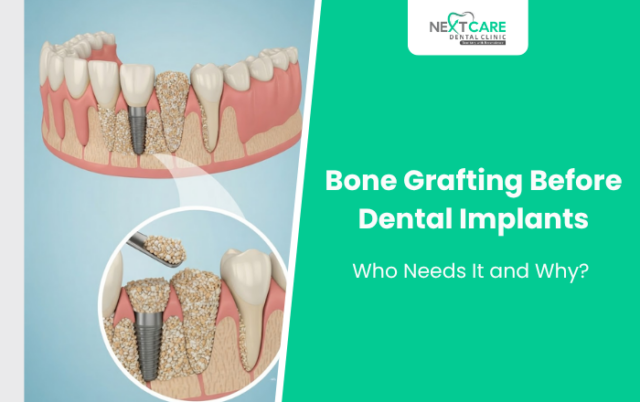
You’ve decided to replace a missing tooth with an implant. Then, at the consultation, your dentist looks at the X-ray and says you may need a bone graft before the dental implant. For many people, that comes as a surprise. Nobody mentioned bone when they started reading about implants.
It’s actually a very common step. An implant needs enough healthy jawbone around it to stay firm for years, and not everyone has that bone in place. This guide explains what bone grafting for dental implants involves, who usually needs it, and what the healing period looks like, in plain language.
What Is Bone Grafting for Dental Implants?
A dental bone graft is a minor procedure that adds bone, or a bone-like material, to the part of the jaw where an implant will go. Over the following months, your body slowly replaces this material with its own new bone. The result is a thicker, stronger base that can hold an implant securely.
Think of it this way: the dental implant is a pillar and the jawbone is the ground it stands in. If the ground is too thin, even a good pillar won’t hold well.
Why Does the Jawbone Shrink After Tooth Loss?
Every time you chew, the root of a natural tooth puts gentle pressure on the jawbone, which keeps the bone healthy. Once the tooth is removed, that stimulation stops and the bone slowly shrinks. This jawbone loss after tooth extraction is fastest in the first few months. It’s painless and invisible, so many people only learn about it when planning an implant years later.
Who Needs a Bone Graft Before Dental Implants?
Not everyone does. Many patients have enough bone and can go straight to implant placement. A graft is more likely if any of these apply to you.
1. The Tooth Was Lost a Long Time Ago
The longer a gap stays empty, the more bone is usually lost. A tooth removed years ago is more likely to need grafting than one removed recently.
2. You Have Had Gum Disease
Advanced gum disease (periodontitis) slowly destroys the bone that supports the teeth. Often this is the very reason teeth become loose and fall out. If gum disease is still active, it needs to be treated first. Our guide on how to prevent gum diseases covers the early warning signs.
3. The Implant Is for an Upper Back Tooth
Above the upper molars sits the maxillary sinus, an air space inside the cheekbone. When upper back teeth are missing, the sinus can expand downward and leave only a thin layer of bone. A sinus lift adds bone in this area so the implant has enough height.
4. You Have Worn Dentures for Many Years
Dentures rest on the gums and don’t stimulate the bone underneath. Over time, the ridge becomes flatter and narrower. If you’re thinking of switching from dentures to implants, our post on dental implants vs dentures for seniors may help you compare.
5. There Was an Injury, Infection or Difficult Extraction
An accident, a long-standing root infection or a tooth that broke during removal can leave a bone defect that needs repair.
How Does a Dentist Check If You Have Enough Bone?
Bone height and width can’t be judged just by looking inside the mouth, so imaging is needed. An OPG (full mouth X-ray) gives an overall view of the jaws and teeth. For implant planning, dentists often also advise a CBCT scan, a 3D X-ray that shows the exact thickness and height of the bone, along with nearby nerves and the sinus. Based on these, your dentist can tell you whether grafting is needed and how much.
Types of Dental Bone Grafts
The type of graft depends on where the bone is missing and how much.
1. Socket Preservation
Graft material is placed in the socket right after a tooth is removed, to limit shrinkage while it heals. If you plan to get an implant later, ask about socket preservation before the extraction.
2. Ridge Augmentation
When the jaw ridge is already too thin or short, bone is added along it to rebuild width or height, usually covered with a protective membrane.
3. Sinus Lift
Used in the upper back jaw, where the sinus lining is gently lifted and graft material placed beneath it.
Where Does the Graft Material Come From?
- Autograft: your own bone, usually taken from another area of the jaw
- Allograft: processed and sterilised human donor bone
- Xenograft: processed bone of animal origin, commonly bovine
- Synthetic grafts: lab-made materials that act as a scaffold for new bone
Each has its own pros and cons. Your dentist will suggest the option that suits your case.
Is Dental Bone Grafting Painful?
The procedure is done under local anaesthesia, so you shouldn’t feel pain while it’s being done. Most people describe it as similar to having a tooth removed.
Some soreness and swelling for a few days afterwards is normal. Prescribed medicines, cold packs and soft food usually keep it manageable. Larger procedures can mean a slightly longer recovery.
A few things help healing:
- Avoid smoking and tobacco, as they slow bone healing
- Don’t chew on the grafted side for the first few days
- Keep the area clean exactly as your dentist advises
- Keep diabetes and other health conditions under control
How Long After a Bone Graft Can You Get an Implant?
In most cases, the graft needs about three to six months to mature before an implant is placed. Larger grafts or sinus lifts can take longer.
When only a small amount of bone is missing, the dentist may place the graft and the implant in the same sitting, provided the implant is stable enough at placement.
Can You Get Implants Without Bone Grafting?
Sometimes, yes. Depending on your bone, a dentist may consider shorter or narrower implants, placing implants at an angle to use existing bone, or a different tooth replacement such as a bridge or denture. Our guide to choosing the right dental implants explains some of these options.
The simplest way to lower your chances of needing a graft is to plan the replacement early, ideally at the time of extraction.
Frequently Asked Questions
1. How do I know if I need a bone graft for a dental implant?
Only an examination with X-rays, and often a CBCT scan, can confirm it. You’re more likely to need one if the tooth was lost long ago, you’ve had gum disease, or the implant is for an upper back tooth.
2. Is a bone graft always needed before implants?
No. Many people have enough healthy jawbone for implants to be placed directly. Grafting is only advised when the bone can’t hold an implant securely.
3. How long does a dental bone graft take to heal?
Usually three to six months, sometimes longer for sinus lifts. Your dentist confirms healing with a follow-up X-ray.
4. Is a bone graft the same as a gum graft?
No. A bone graft rebuilds the jawbone, while a gum graft covers exposed tooth roots caused by receding gums. You can read more in our article on gum graft surgery.
5. Can a bone graft fail?
It’s uncommon, but it can happen. Smoking, infection, uncontrolled diabetes and not following aftercare instructions raise the risk. If a graft doesn’t take, the area can usually be treated again once it heals.
Planning Dental Implants in Lohegaon, Pune?
If you’re unsure whether your jawbone is ready for an implant, a proper check of your bone, gums and overall health will tell you whether you can go straight to an implant, need a graft first, or would do better with another option.
At Nextcare Dental Clinic, Dr. Mahesh Mali (BDS), with over 13+ years of clinical experience, evaluates patients for dental implants in Pune and explains the treatment plan clearly before anything begins. The clinic is on Porwal Road, Lohegaon, and is easily reachable from Dhanori, Vishrantwadi, Tingre Nagar and Viman Nagar. Patients who need more extensive work can also ask about full mouth rehabilitation.
Address: Office No. 306, 3rd Floor, Park Plaza, Porwal Rd, Lohegaon, Pune, Maharashtra 411047
Phone: 92266 31613
Google Business Profile: View Nextcare Dental Clinic
WhatsApp: Chat with the clinic
You can also book an appointment online.