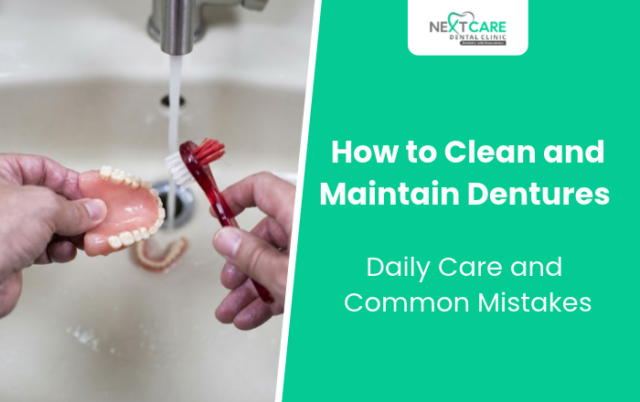
Getting used to dentures takes time, and so does learning how to look after them. A denture sits in a warm, moist mouth all day, so food, plaque and bacteria collect on it just as they do on natural teeth. Without regular cleaning, dentures can stain, smell and irritate the gums.
The good news is that denture care is simple once it becomes a habit. This guide covers how to clean dentures every day, how to store them overnight, the common mistakes people make and when to see a dentist.
Why Denture Cleaning Matters
Dentures are not just a replacement for teeth. They rest on your gums and mix with saliva all day. If they are not cleaned properly, a few things can happen:
- Plaque and tartar build up on the surface
- Stains and bad breath develop
- Gums become red, sore or swollen
- A fungal infection called denture stomatitis may appear under the denture
Clean dentures also feel more comfortable and look more natural. Keeping the mouth clean matters for people with dentures too, and our post on how to prevent gum diseases explains why gum care does not stop once teeth are replaced.
How to Clean Dentures Every Day
1. Remove and Rinse After Meals
Take the denture out after eating and rinse it under running water to wash away loose food. Do this over a basin filled with water or a folded towel, so it does not break if it slips from your hand.
2. Brush Gently Once a Day, Properly
Use a soft denture brush or a soft toothbrush with a non-abrasive denture cleaner, or a little mild soap. Brush every surface, including the side that touches the gums and the grooves where food gets trapped. Hold the denture firmly, but do not squeeze it, as this can bend the clasps of a partial denture.
3. Skip Regular Toothpaste
Many toothpastes are gritty. Over time they can leave tiny scratches on the denture surface, and these scratches collect stains and bacteria.
4. Soak It Overnight
Dentures need to stay moist so they do not dry out or lose their shape. Place them in plain water or in a denture-soaking solution as your dentist advises. Always follow the product instructions, and rinse the denture well before wearing it again, because some solutions can irritate the mouth.
5. Clean Your Mouth Too
Brush your gums, tongue and the roof of your mouth with a soft toothbrush every morning before putting the denture in. This removes plaque, improves circulation and helps keep the mouth fresh. If you still have some natural teeth, keep brushing and flossing them carefully.
How to Maintain Dentures Between Dental Visits
- Give your gums a break. Many dentists advise removing dentures at night, unless told otherwise for your situation.
- Handle with care. Dentures can crack or chip if dropped on a hard floor.
- Keep them cool. Use lukewarm or cool water only.
- Store them safely. Keep the denture in a labelled container, away from children and pets.
- Do not ignore small changes. A loose fit, a sore spot or a new crack deserves a check.
Common Denture Care Mistakes
Using Hot or Boiling Water
Hot water can warp the acrylic base. A denture that no longer fits well can rub the gums and cause sore spots.
Cleaning With Harsh Products
Household bleach, strong detergents, scouring powder and very stiff brushes can damage the denture and may harm the mouth. Use only products meant for dentures, or mild soap.
Leaving Dentures to Dry Out
If they stay dry for long periods, the material can lose its shape. Keep them in water or a soaking solution when they are not in use.
Trying to Fix Them at Home
Using household glue on a crack, or trimming a rough spot with a blade or nail file, usually makes things worse. Even a small change in shape can affect how the denture sits. Repairs and adjustments should be done by your dentist.
Sleeping in Dentures Without Advice
Wearing them round the clock does not allow the gums to rest and may raise the chance of irritation and infection. Ask your dentist what is suitable for you.
Skipping Dental Checkups
The shape of the jaw and gums changes slowly over the years, so a denture that fitted well can become loose. Regular checkups allow these changes to be spotted early. If you are also comparing replacement options, our article on choosing between dental implants and dentures may help.
Tips for People Who Are New to Dentures
The first few weeks can feel strange. Extra saliva, mild soreness and some difficulty with speech are common as your mouth adjusts. A few habits make this phase easier:
- Start with soft foods and cut them into small pieces.
- Chew on both sides of the mouth at the same time to keep the denture steady.
- Read aloud for a few minutes a day to get used to speaking with the denture.
- Attend the follow-up visit your dentist suggests, so minor sore spots can be adjusted early.
When Should You See a Dentist?
Book a visit if you notice any of the following:
- Persistent sore spots, ulcers or red patches under the denture
- A denture that feels loose or slips while eating or speaking
- Cracks, chips or a broken clasp
- White patches, burning or a bad taste in the mouth
- Stains or hardened deposits that do not come off with cleaning
- Difficulty chewing or speaking that was not there before
Do not wait for the discomfort to pass. Ill-fitting dentures can keep irritating the gums and make it harder to eat comfortably.
Frequently Asked Questions About Denture Care
1. Can I clean my dentures with toothpaste?
It is usually better not to. Many toothpastes are abrasive and can scratch the denture. Use a denture cleaner or mild soap with a soft brush.
2. Should I wear dentures at night?
Most dentists suggest removing them overnight so the gums can rest. Your dentist can advise you based on your own situation.
3. How do I clean dentures if I have a partial denture?
Clean it the same way, but handle the metal clasps with extra care, as they can bend. Clean around any remaining natural teeth as well.
4. How often should dentures be checked?
Regular dental checkups are advised, and your dentist can tell you how often suits you. Visit sooner if the fit changes or you feel discomfort.
5. Can bad breath come from dentures?
Yes. Plaque and food left on the denture, or on the tongue and gums, can cause bad odour. Daily cleaning of both the denture and the mouth usually helps.
Need Help With Denture Care in Lohegaon, Pune?
If your denture feels loose, looks stained or is causing discomfort, a dental examination can show what is going on and what can be done. At Nextcare Dental Clinic, Dr. Mahesh Mali (BDS), who has 13 years of clinical experience, can examine your mouth and explain the options for your case.
Address: Office No. 306, 3rd Floor, Park Plaza, Porwal Rd, Lohegaon, Pune, Maharashtra 411047
Phone: 92266 31613
Google Business Profile: View Nextcare Dental Clinic
You can also book an appointment online.
This article is for general information and does not replace a dental examination.

